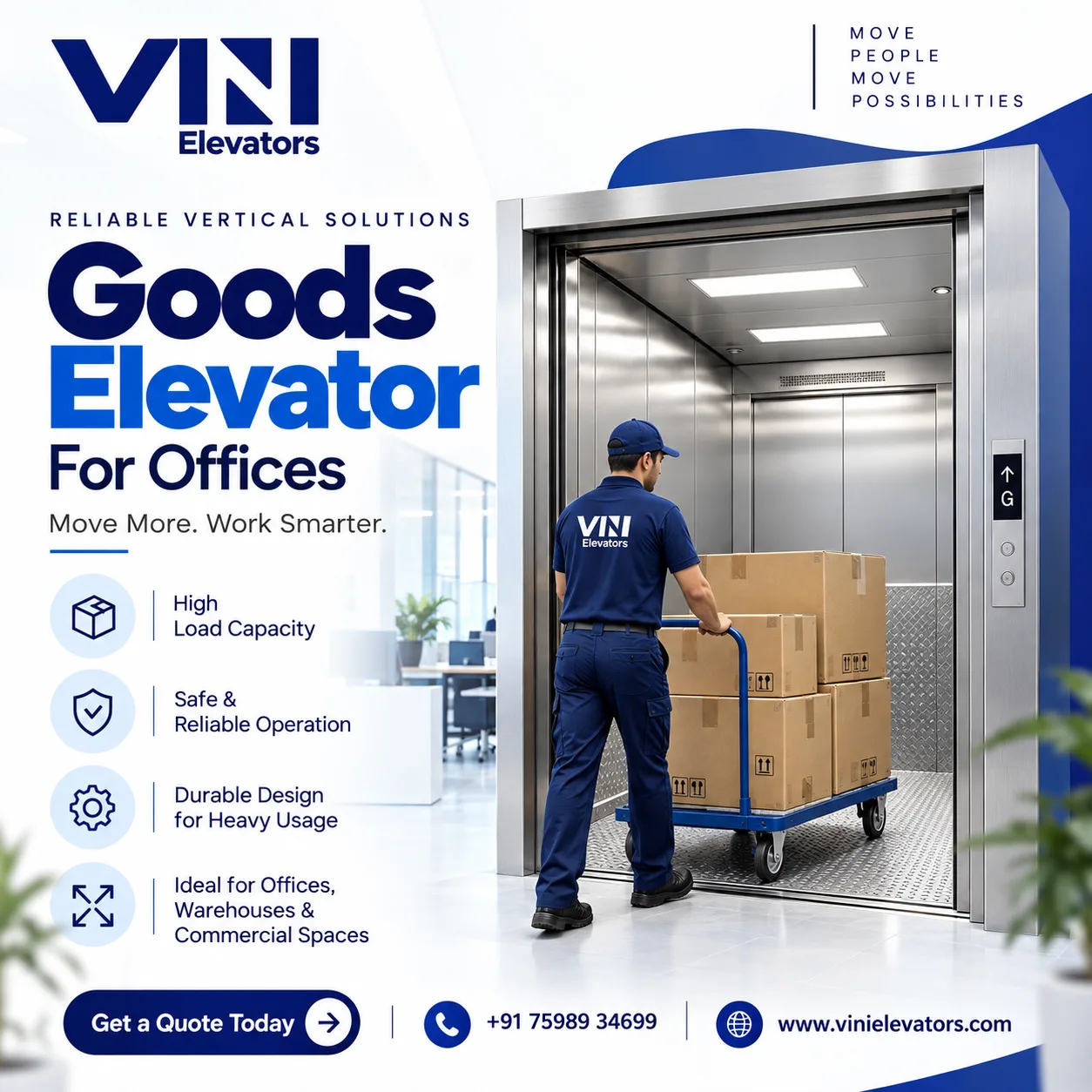
Modern offices and commercial buildings often need to move cartons, equipment, furniture, documents, and other materials between floors. A properly designed Goods Elevator can make this process easier, safer, and more efficient.
What Is a Goods Elevator?
A Goods Elevator, also known as a Goods Lift or Freight Elevator, is designed primarily for transporting materials and goods between different floors of a building.
Unlike a standard passenger elevator, a goods elevator is typically planned around factors such as load capacity, cabin dimensions, loading requirements, usage frequency, and the type of materials being transported.
Why Do Offices Need a Goods Elevator?
Modern offices may have multiple floors, storage areas, equipment rooms, warehouses, service areas, and commercial facilities. Moving heavy or bulky materials manually between floors can be inconvenient and time-consuming.
A dedicated goods elevator can provide a practical solution for regular material movement within a commercial building.
1. Easy Material Movement
Cartons, office equipment, furniture, supplies, and other materials can be moved between floors more conveniently using a suitable goods lift.
2. Supports Daily Business Operations
Efficient movement of materials can help businesses manage their daily operations more smoothly, especially where goods need to be transported frequently between different floors.
3. Designed for Heavy Loads
Goods elevators can be configured according to the required load capacity and the type of materials that need to be transported.
4. Suitable for Different Commercial Applications
Goods elevators can be considered for offices, warehouses, commercial buildings, retail spaces, industrial facilities, and other locations where vertical material transportation is required.
Important Factors When Choosing a Goods Elevator
Selecting a goods elevator should be based on the actual requirements of the building and the materials being transported.
Load Capacity
Determine the maximum weight that needs to be transported regularly. The capacity should also take into consideration equipment such as trolleys or other loading systems when applicable.
Elevator Cabin Size
The cabin dimensions should be suitable for the size of the goods, cartons, equipment, or furniture that will be transported.
Number of Floors
The number of floors and the required travel distance are important factors when planning a goods elevator installation.
Loading Requirements
Different businesses may have different loading requirements. Manual loading, trolley loading, and other material-handling methods should be considered during the design stage.
Frequency of Usage
A goods elevator used throughout the working day may require a different specification from an elevator used occasionally. Understanding the expected usage helps in selecting an appropriate solution.
Goods Elevator for Modern Office Buildings
A goods elevator is more than a system for moving products from one floor to another. It should be planned according to the building layout, daily workflow, load requirements, and material-handling process.
With the right elevator configuration, businesses can create a more organised approach to moving materials within their commercial premises.
Why Choose VINI Elevators?
VINI Elevators provides elevator solutions designed for different building and application requirements. Our solutions can be considered for offices, commercial buildings, warehouses, and other business environments where reliable vertical transportation is required.
If you are planning a Goods Elevator for your office, commercial building, warehouse, or business premises, contact VINI Elevators to discuss your requirements.
Move More. Work Smarter.
Looking for a Goods Elevator for your business? Contact VINI Elevators today.
Phone: +91 75989 34699
Website: www.vinielevators.com